
By Shane Bonnot, CCA Texas Advocacy Director
Longtime anglers who’ve fished East Matagorda Bay before its relatively recent, unprecedented decline have asked this question for the past several years. What happened to all the seagrass in East Matagorda Bay? The loss of seagrass habitat is almost certainly not due to a single cause but to a combination of stressors that have led to a decline in water quality and made conditions unsuitable for seagrass. These include land-use changes (historic rice fields converted to other crops with higher inputs), reduced freshwater inflows and/or estuarine mixing, hard winter freezes, sedimentation, rising numbers of herbivorous sea turtles, and physical disturbance from boats running shallow flats and uprooting grass. Boat damage is an avoidable factor—uprooting seagrass with a propeller is illegal and a responsibility every shallow-water boater should take seriously.
A bit of local context: East Matagorda Bay is a small lagoon-type estuary between Sargent and Matagorda, Texas. It separated from West Matagorda Bay in the early 1900s after the Colorado River log jam was removed and a flood-relief channel was dredged. More than 15 years ago, the bay’s southern shoreline featured robust shoalgrass beds and drift algae that extended 75–180 ft from the barrier island shore and spanned nearly 16 miles from Spring Bayou to Brown Cedar Cut.
Those beds were valuable habitat—nursery and feeding grounds for larval organisms, shrimp, crabs, and gamefish, foraging areas for birds, and providers of ecosystem services like sediment stabilization, water clarity improvement, shoreline protection, and carbon sequestration. I remember wading near 3-Mile Cut in the late 1990s and swearing at the dense seagrass while sight-casting for redfish—at the time I didn’t fully appreciate how critical the habitat was and blamed it for my day’s failures.
Can seagrass be reestablished, and do the physical and water-quality conditions still exist along the southern shoreline to support recovery? To begin answering that, the Matagorda Bay Foundation (MBF) launched a pilot seagrass study funded by Phillips 66. After anglers and community members raised concerns, MBF surveyed the southern shoreline, confirmed the dramatic decline, and documented loss of submerged aquatic vegetation in the shallow fringe.
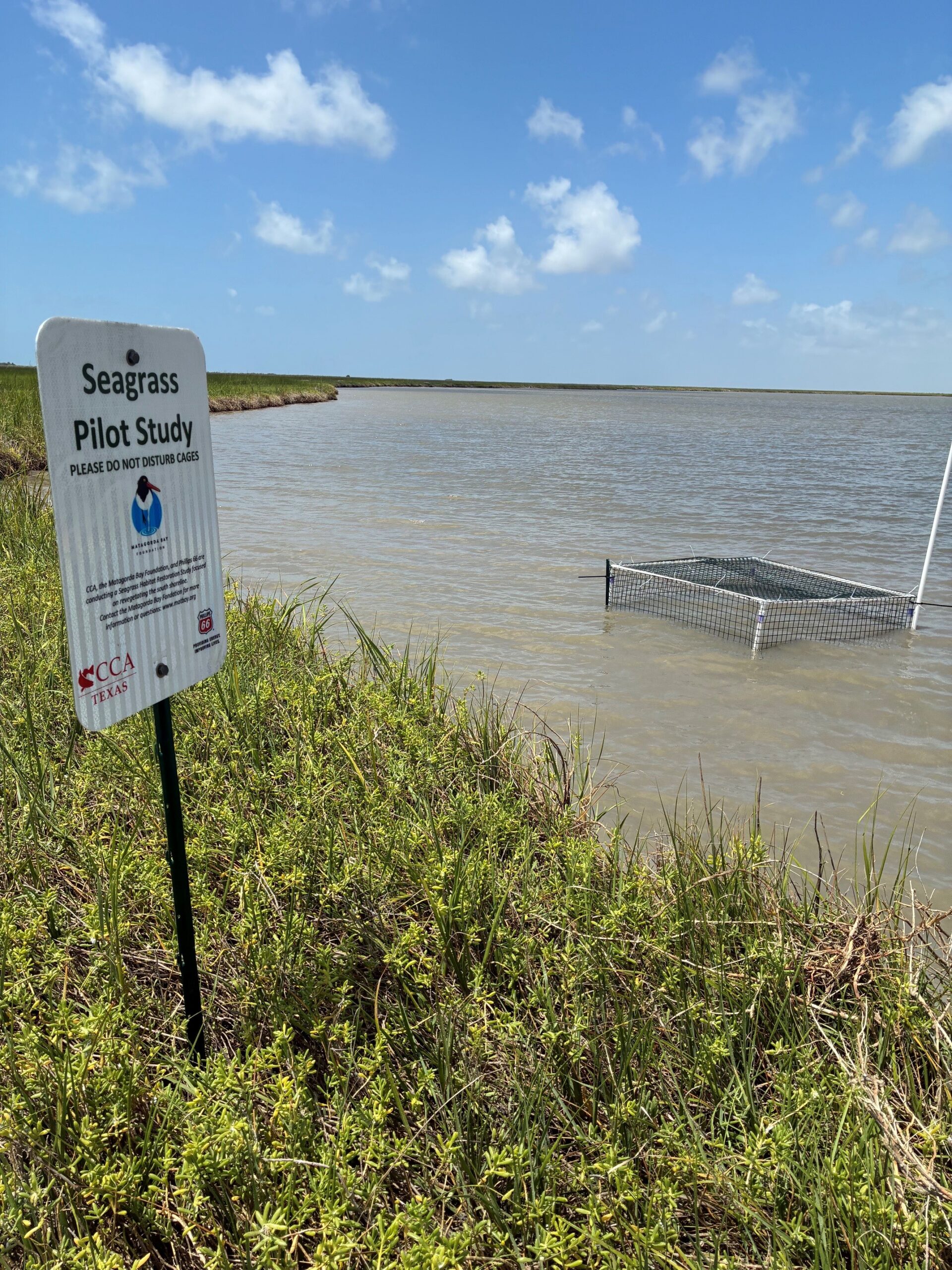
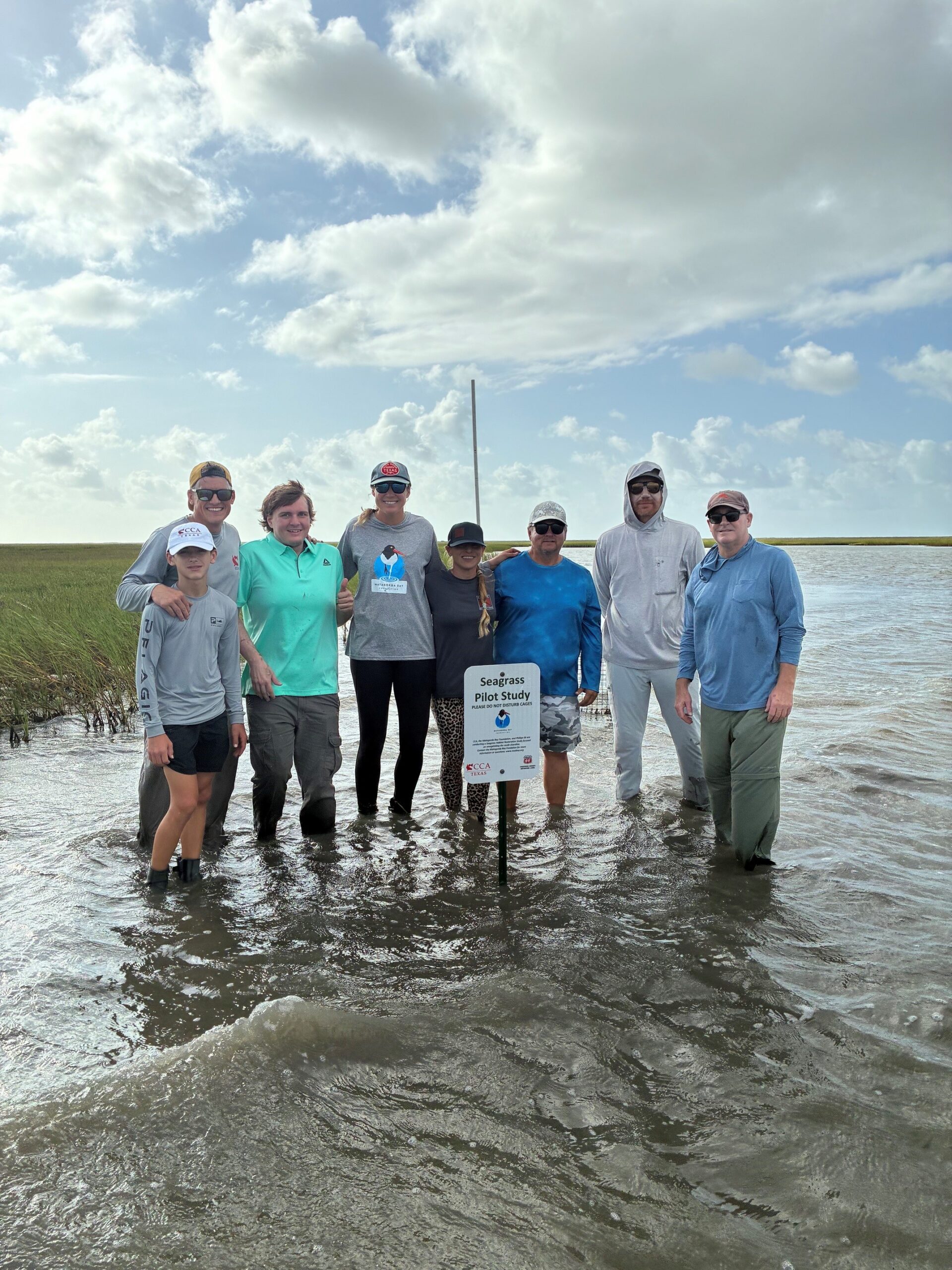
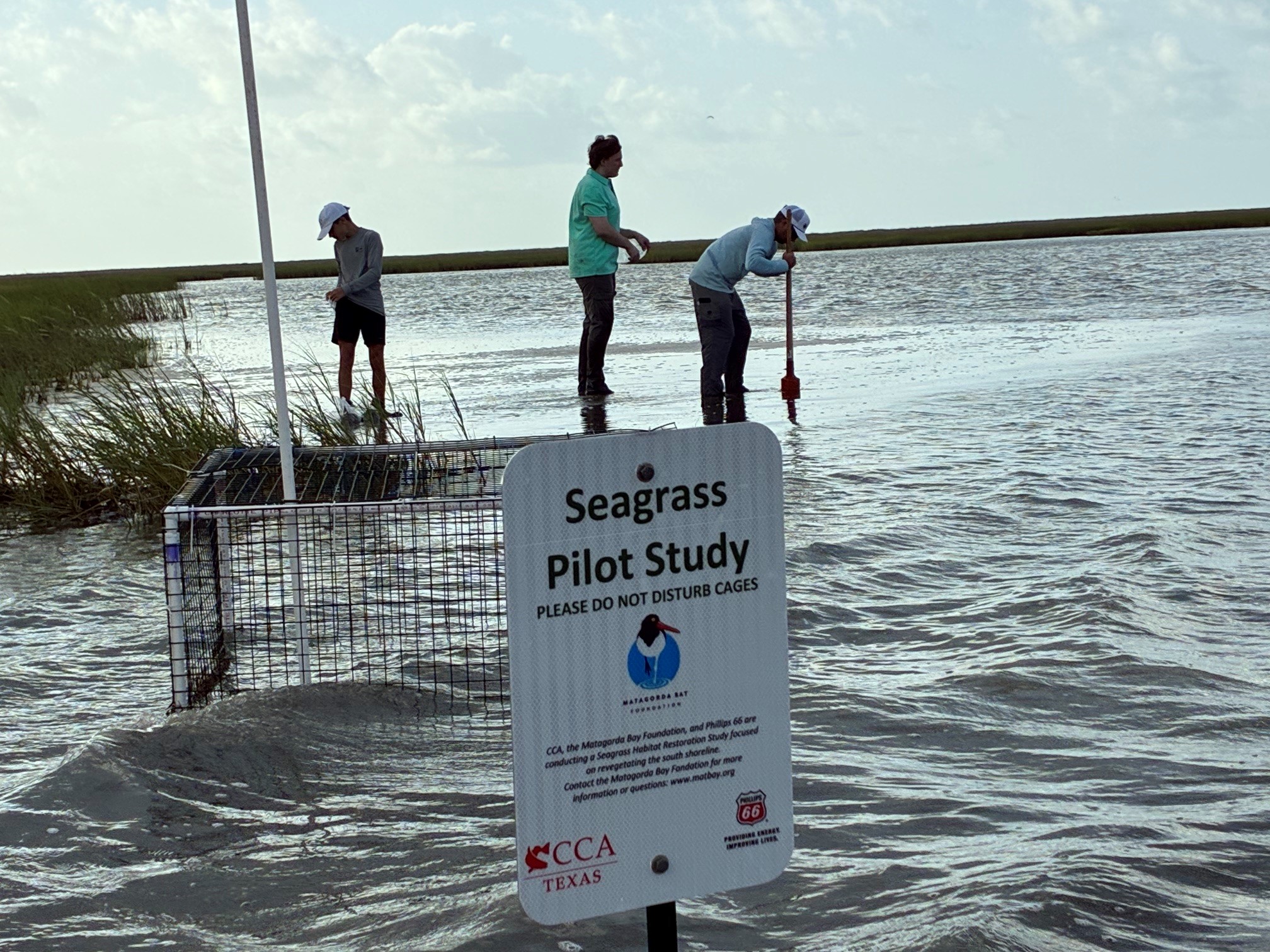
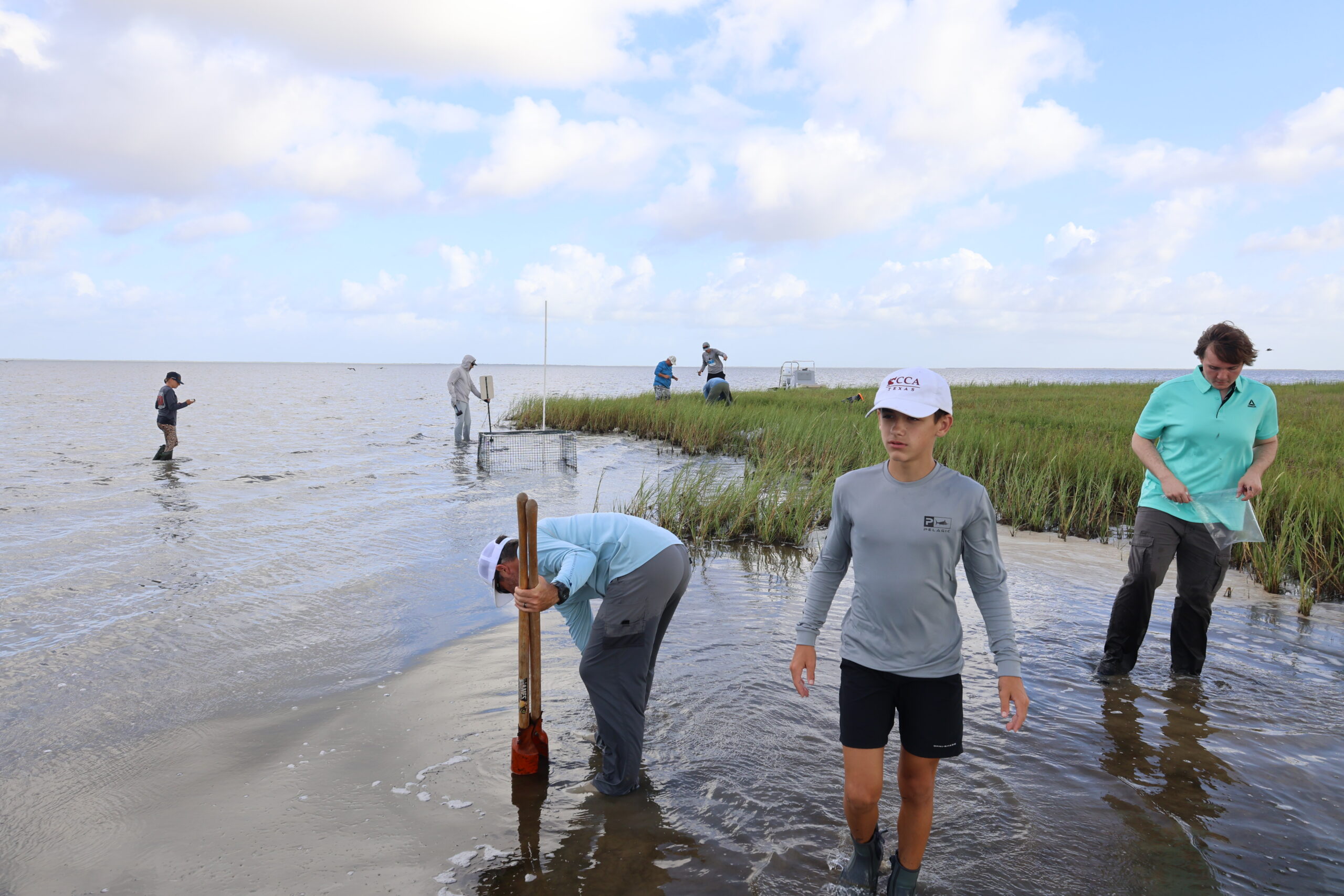
With Phillips 66 support and required research permits in hand, MBF and volunteers collected shoalgrass plugs (sediment, roots/rhizomes, and leaves) from a small donor site near Eidelbach Reef. That donor site will serve as the control, while transplanted plugs were moved to three study locations between Eidelbach Reef and the now-submerged Hog Island. All transplant plots and the donor site are protected inside mesh enclosures to reduce mechanical removal by animals and are clearly marked to help boaters avoid them. MBF will monitor these sites for at least 12 months and will share results with Phillips 66, academic partners, and state and federal resource agencies. CCA Texas is partnering with MBF on this pilot study.
What else needs to happen to answer, “What happened to all the seagrass?” and do we improve recovery prospects?
The list is long and exhaustive, but priorities include increasing estuarine mixing and improving water quality in the bay. Additional freshwater inflows and some connectivity between the bay and the Colorado River off Beach Road would help (for example, near St. Mary’s Bayou or Parker’s Cut). We also need more research to build on MBF’s pilot work; if transplants can be shown to survive across the bay, then larger-scale restoration should be considered. And, of course, shallow-water boaters must avoid uprooting grass and follow best practices.
The pilot study is a critical first step—testing transplant survival and whether local conditions support regrowth. Long-term recovery will depend on coordinated science, active management of land- and water-based stressors, sustained monitoring, and community stewardship. If you fish, boat, or live around East Matagorda Bay and want to help, consider supporting MBF and CCA Texas, following shallow-water boating practices, reporting seagrass regrowth observations to local groups (CCA, MBF, TPWD), and joining citizen-science and volunteer restoration efforts. Those collective actions will improve the chances that the bay’s seagrass beds can return.
Who is the Matagorda Bay Foundation?
Founded in 1995, The Matagorda Bay Foundation (MBF) is a 501(c)(3) non-profit organization dedicated to the wise stewardship of the Matagorda Bay ecosystem and the watersheds that sustain it. MBF’s first initiative was to support critical freshwater inflow needs for Whooping Cranes near San Antonio Bay, Texas. In 2018, MBF hired it’s first employee to establish the Foundation on the ground as a full-service, non-profit community and regional partner. Today, MBF restores and conserves the region’s shoreline and near-shore ecosystems, oyster reefs, coastal wetlands, marshes, and the freshwater rivers and streams that flow through the area to the Bay. MBF works closely with local and county governments, commercial and recreational fishers, nature enthusiasts, state and federal resource agencies, and academia to educate and advocate for research, planning, and conservation of Matagorda Bay’s habitats and resources. The Foundation has become the region’s leader in conservation, restoration, and outreach for Matagorda Bay.